
Question Number 167787 by BagusSetyoWibowo last updated on 25/Mar/22

Answered by Jamshidbek last updated on 25/Mar/22
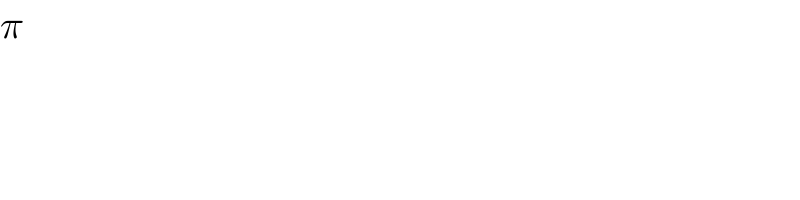
$$\pi \\ $$
Answered by Mathspace last updated on 25/Mar/22
![=∫_(−2) ^2 (x^3 cos((x/2))+(1/2))(√(4−x^2 ))dx =∫_(−2) ^2 x^3 cos((x/2))(√(4−x^2 ))dx(=0) +(1/2)∫_(−2) ^2 (√(4−x^2 ))dx =∫_0 ^2 (√(4−x^2 ))dx (x=2sint) =∫_0 ^(π/2) (√(4−4sin^2 t))2cost dt =4∫_0 ^(π/2) cos^2 t dt =2∫_0 ^(π/2) (1+cos(2t)dt =π +2[(1/2)sin(2t)]_0 ^(π/2) =π +0=π](https://www.tinkutara.com/question/Q167794.png)
$$=\int_{−\mathrm{2}} ^{\mathrm{2}} \left({x}^{\mathrm{3}} {cos}\left(\frac{{x}}{\mathrm{2}}\right)+\frac{\mathrm{1}}{\mathrm{2}}\right)\sqrt{\mathrm{4}−{x}^{\mathrm{2}} }{dx} \\ $$$$=\int_{−\mathrm{2}} ^{\mathrm{2}} {x}^{\mathrm{3}} {cos}\left(\frac{{x}}{\mathrm{2}}\right)\sqrt{\mathrm{4}−{x}^{\mathrm{2}} }{dx}\left(=\mathrm{0}\right) \\ $$$$+\frac{\mathrm{1}}{\mathrm{2}}\int_{−\mathrm{2}} ^{\mathrm{2}} \sqrt{\mathrm{4}−{x}^{\mathrm{2}} }{dx} \\ $$$$=\int_{\mathrm{0}} ^{\mathrm{2}} \sqrt{\mathrm{4}−{x}^{\mathrm{2}} }{dx}\:\left({x}=\mathrm{2}{sint}\right) \\ $$$$=\int_{\mathrm{0}} ^{\frac{\pi}{\mathrm{2}}} \sqrt{\mathrm{4}−\mathrm{4}{sin}^{\mathrm{2}} {t}}\mathrm{2}{cost}\:{dt} \\ $$$$=\mathrm{4}\int_{\mathrm{0}} ^{\frac{\pi}{\mathrm{2}}} {cos}^{\mathrm{2}} {t}\:{dt} \\ $$$$=\mathrm{2}\int_{\mathrm{0}} ^{\frac{\pi}{\mathrm{2}}} \left(\mathrm{1}+{cos}\left(\mathrm{2}{t}\right){dt}\right. \\ $$$$=\pi\:+\mathrm{2}\left[\frac{\mathrm{1}}{\mathrm{2}}{sin}\left(\mathrm{2}{t}\right)\right]_{\mathrm{0}} ^{\frac{\pi}{\mathrm{2}}} \\ $$$$=\pi\:+\mathrm{0}=\pi \\ $$
Commented by peter frank last updated on 26/Mar/22

$$\mathrm{thank}\:\mathrm{you} \\ $$